Trekking to Annapurna Base Camp in Nepal
Trekking through the Himalaya Mountains in Nepal has been something on my mind since I was a teenager. I read the books, saw the stories, and the more I traveled and trekked around the world the more I set my eyes on Nepal as the ultimate, maybe even climatic, spot to adventure. Finally in my early 40's the stars aligned to travel halfway around the world and experience it. I spent several days, more time in Nepal beyond, trekking to Annapurna Base Camp. Annapurna sits at 26,545 feet, while its base camp requires a several day non technical trek to 13,500 plus feet that can put you at the forefront of the highest, and most dangerous, mountains in all the world. In this article I share my story trekking to Annapurna Base Camp in Nepal!
If you’re interested in learning more about a tea house to tea house trekking experience in Nepal, and specifically the one to Annapurna Base Camp, then read on below!
The Annapurna Base Camp Trek is an out and back hike that requires permits, perhaps a guide (we went with Last Frontiers Trekking), probably a porter, and getting to the city of Pokhara Nepal. From there it’s a three or four hour drive (4x4 required!) to reach the start of the trek. Pokhara has short daily flights (about 30 minutes) from Kathmandu (the capital and main airport of Nepal and where you’ll fly into unless you live in Nepal.) OR you can drive to Pokhara (an additional six or seven hour drive from Kathmandu.)
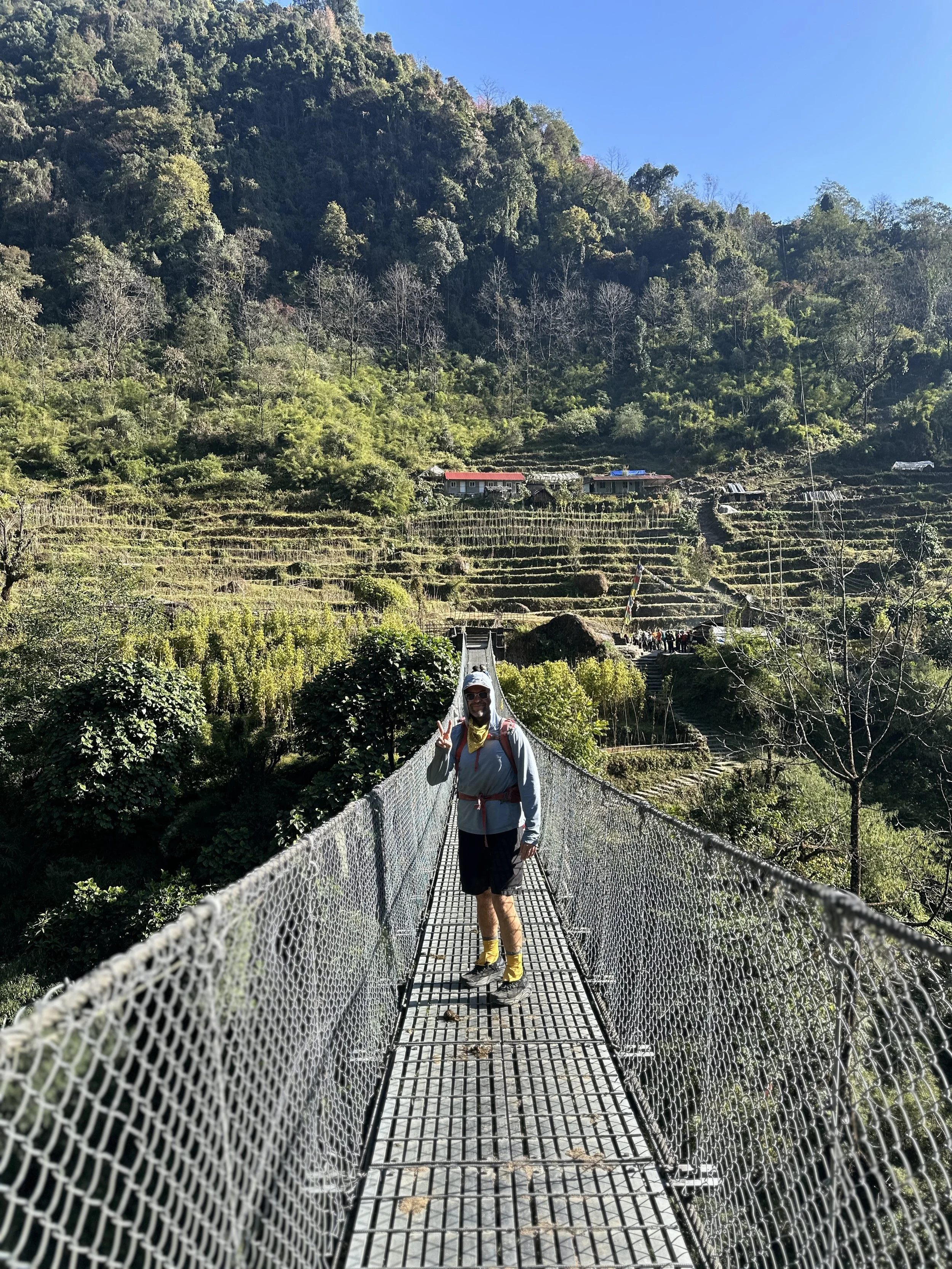
Once you arrive at the beginning of the Annapurna Base Camp Trek you’ll be met with your first true trekking adventure! You’ll get to cross a VERY LONG hanging bridge (picture below.) And from there your trek is just beginning. It took us five days, we moved slowly and made sure we acclimated to the elevation, to reach Annapurna Base Camp. It then took us two days to hike back to the bridge, yes you get to cross this bridge twice :)!
In between the bridges and the mountains is pure hiking bliss. You’ll get to hike where there are no roads and the path is adorned with tea houses and small villages. The ABC trek is super accessible to hike from tea house to tea house and not have to carry any camping gear. Though it’s recommended in high season to make tea house reservations in advance! (We went in late November/early December and the weather was spectacular and the crowds were sparse as we entered shoulder season.)
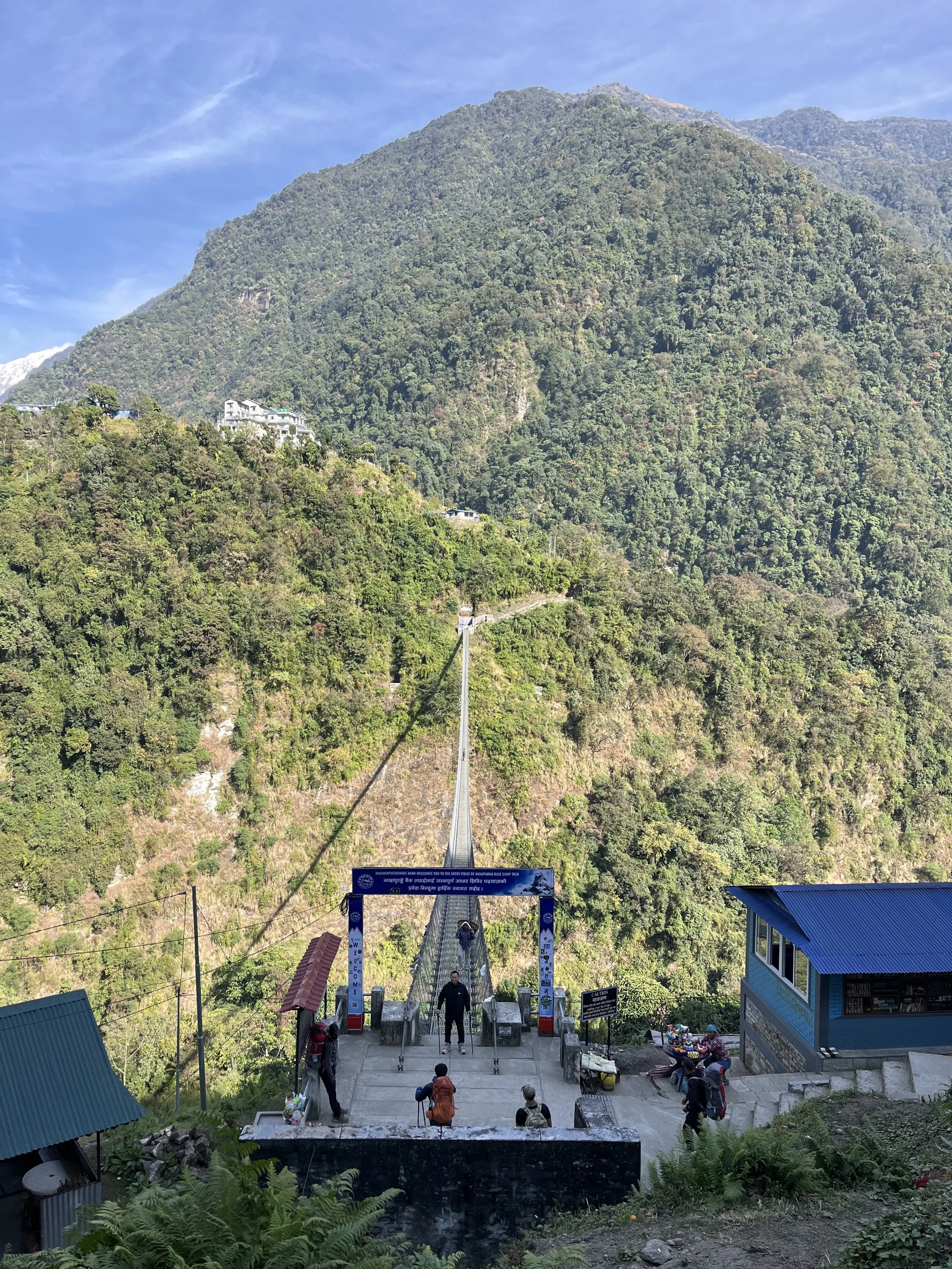
I have no fear of heights, until about the middle of this bridge :)! And I was certainly not going to hang out and enjoy the view. You’ll cross this and another shorter one for FOUR BRIDGE crossings!
What did I love about the Annapurna Base Camp Trek in Nepal?
Visiting Nepal and being able to do a teahouse trek in the Himalayan Mountains has long been something I hoped to do. For where I currently live the region of India, Nepal, and Bhutan are about halfway around the world. It’s hard to reach flying East or West. So it took me some time to arrive. But the patience in awaiting the right time to trek here was all worth it!
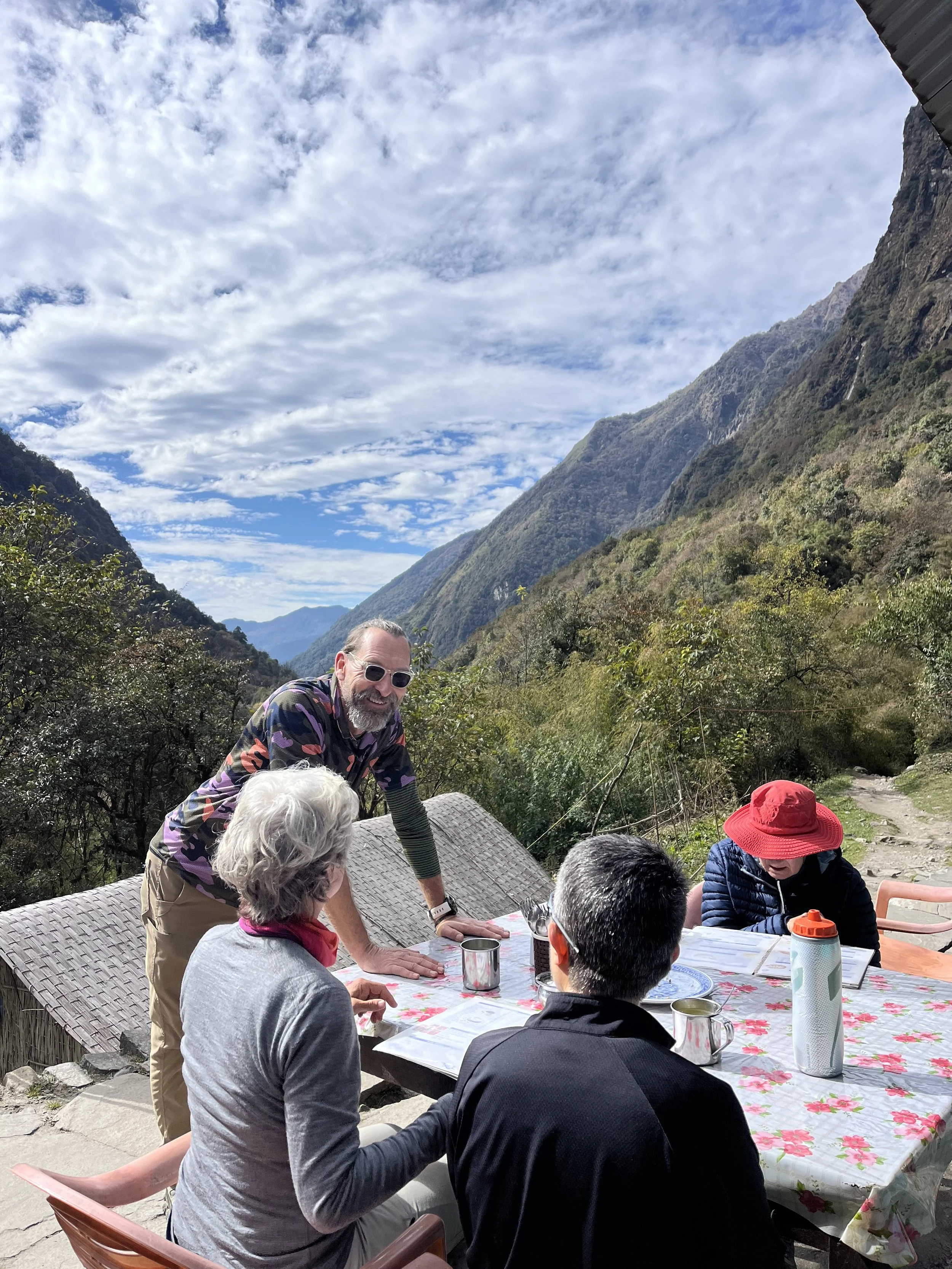
My friend Laura (who has an adventure travel company called Vitality Active Travel) had put together a small group to go with Last Frontiers Trekking. We had a seasoned guide and even a porter who has been to the summit of Everest several times. The dates aligned PERFECTLY that she had put together with my availability (I worked seasonally on a vegetable farm and the offseason had just begun!)
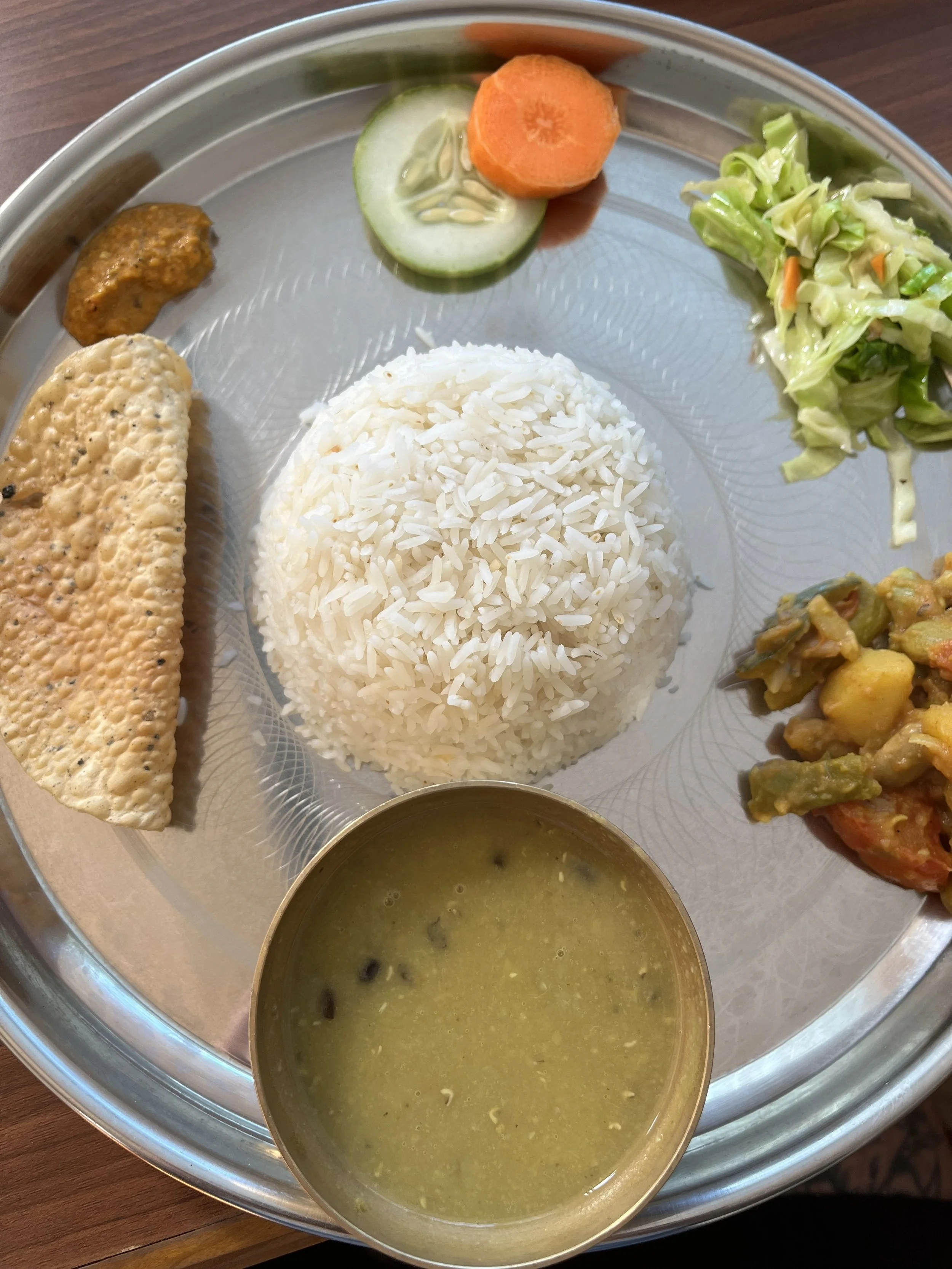
I received an incredibly nourishing two weeks in Nepal and seven days on the Annapurna Base Camp Trek. Done with two very good friends of mine and several “new great friends” both in our small group and others that we met along the way. We moved with intention and the best of luck with the weather. We ate dhal bhat, drank ginger tea, and stared in awe at birds, monkeys, and the mountains!
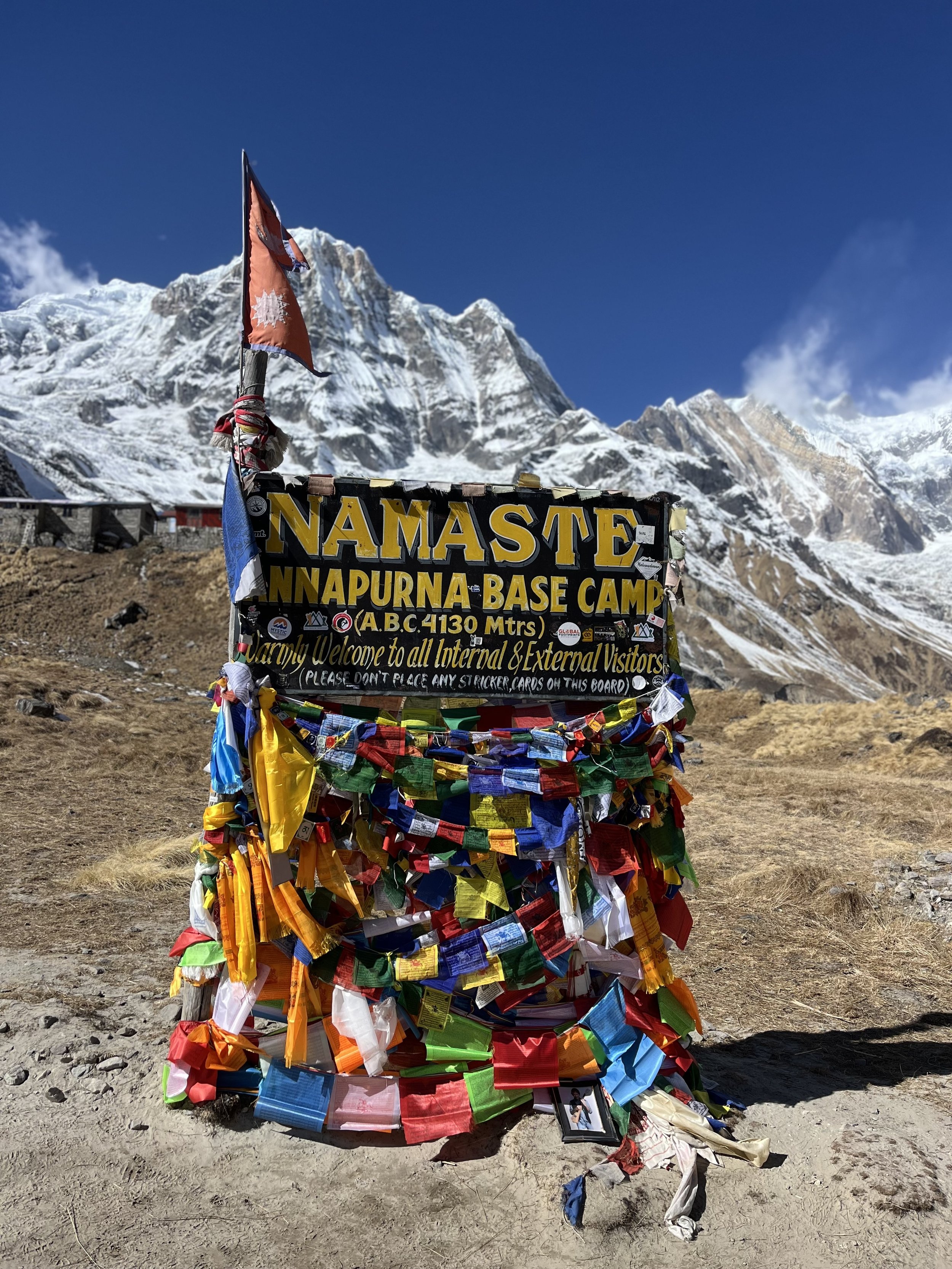
As a yogi I got to say Namaste (hello in Nepalese) more times in a day than I ever would have teaching western yoga classes! The trek required tough, but not punch you in the gut, hiking days. The elevation also got high (4,130 meters) but not so high that your body couldn’t function properly. I have been up to 6,000 meters and I would say my edge/breaking point is at about 4,500 meters. Above that I need diamox (which I don’t like to take), I can’t breathe, and I am a cranky mess. This trek was in the sweet spot of elevation for me!
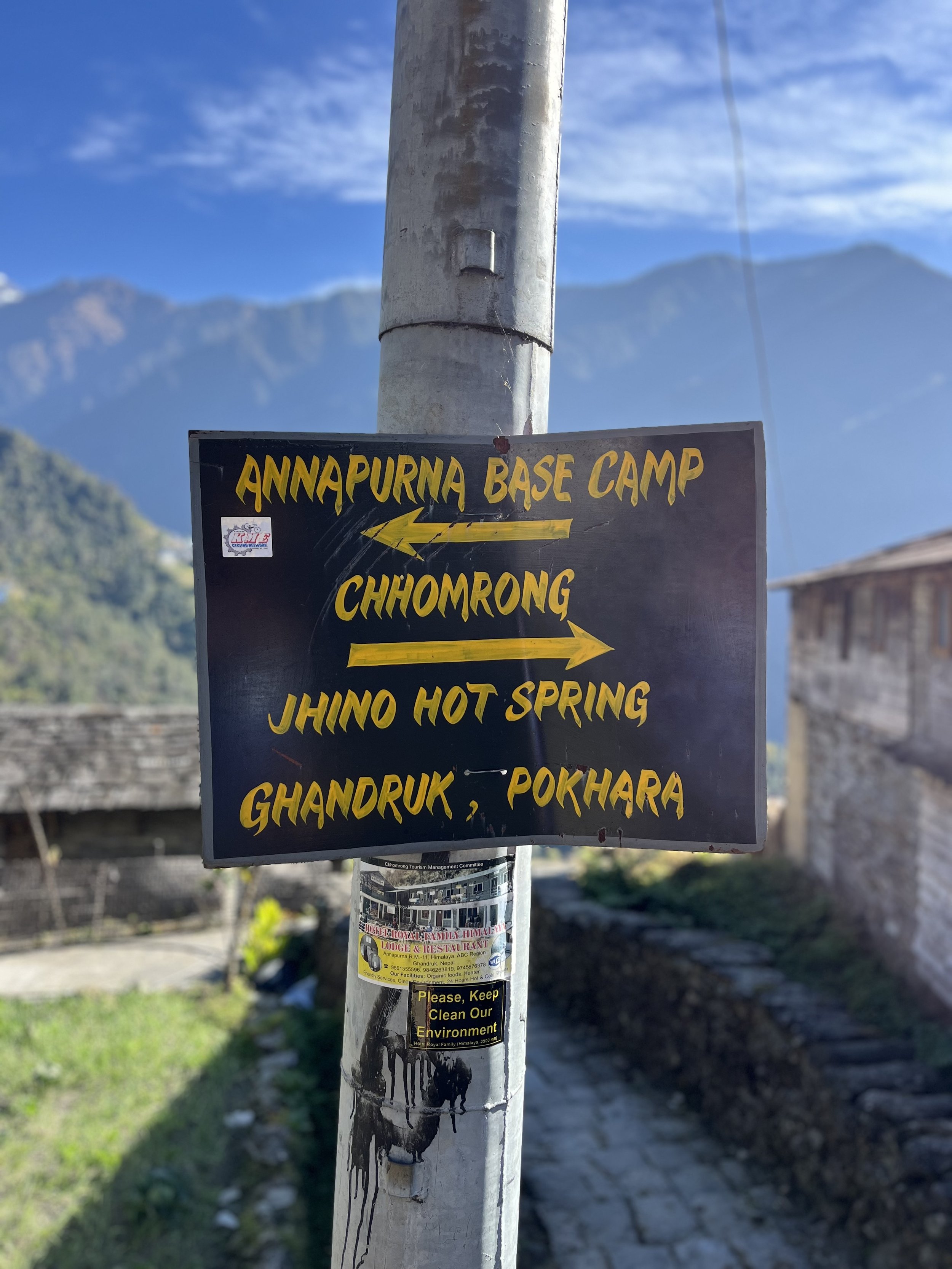
Let’s talk about the actual Annapurna Base Camp Trekking route!
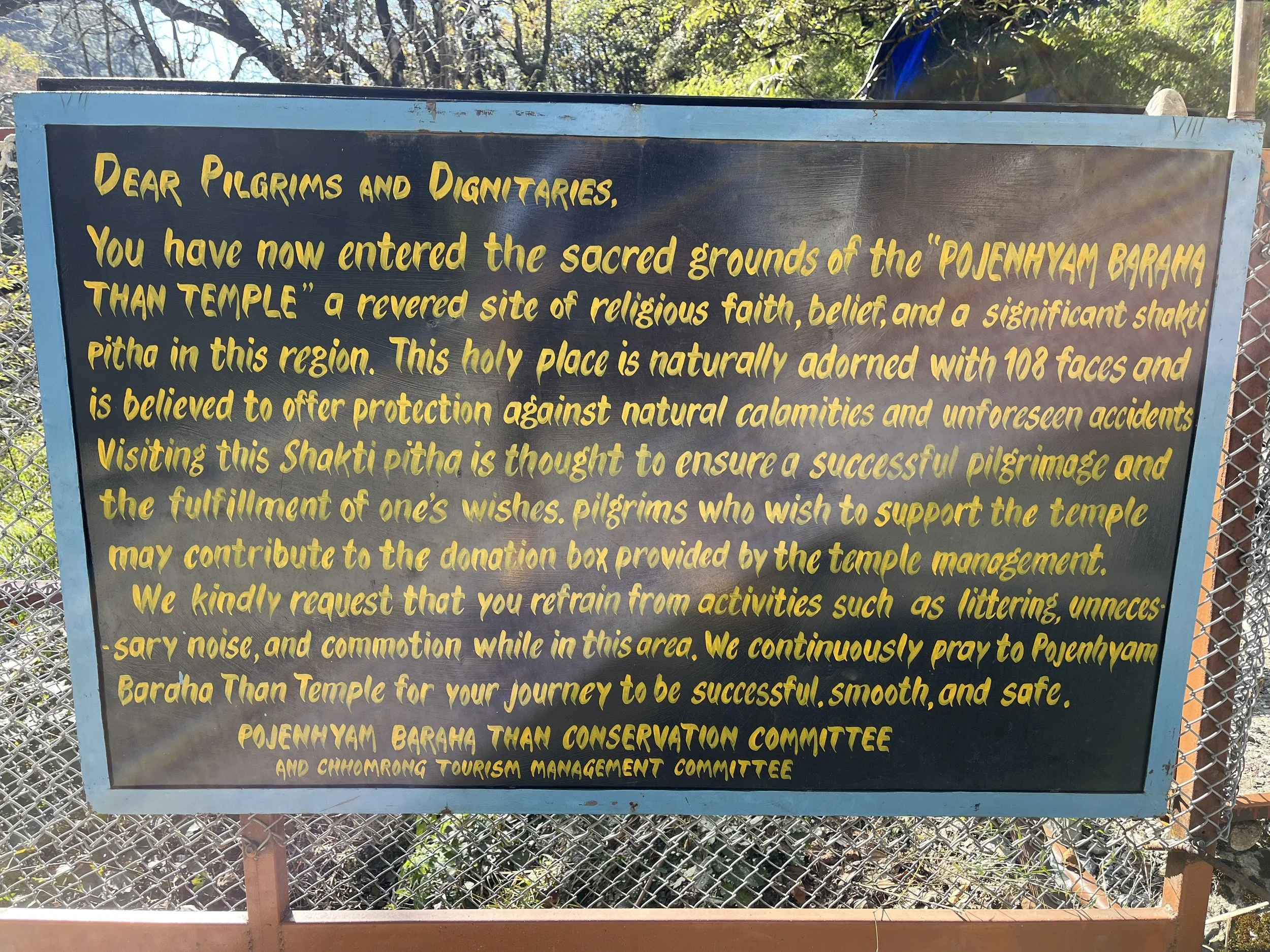
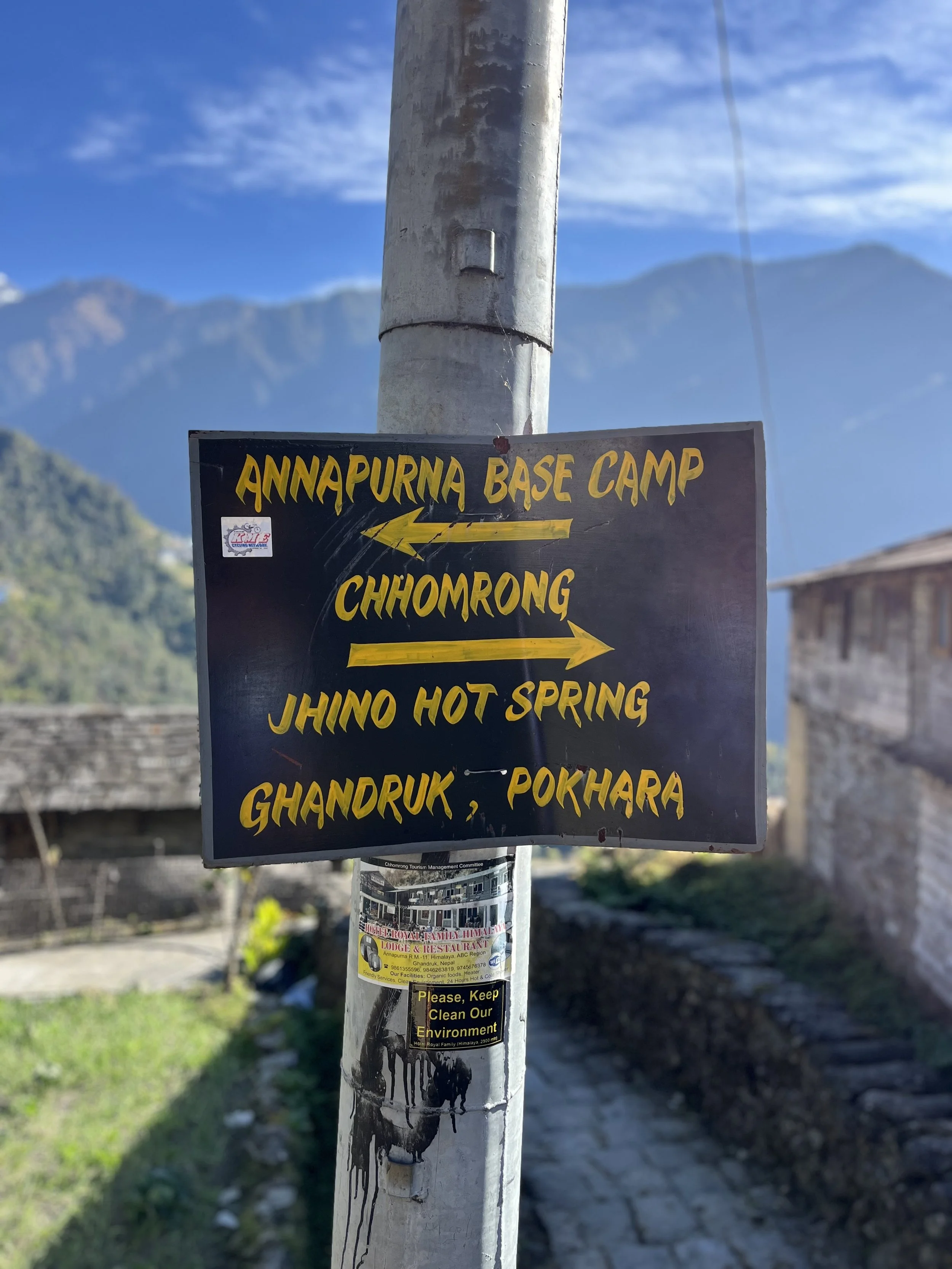
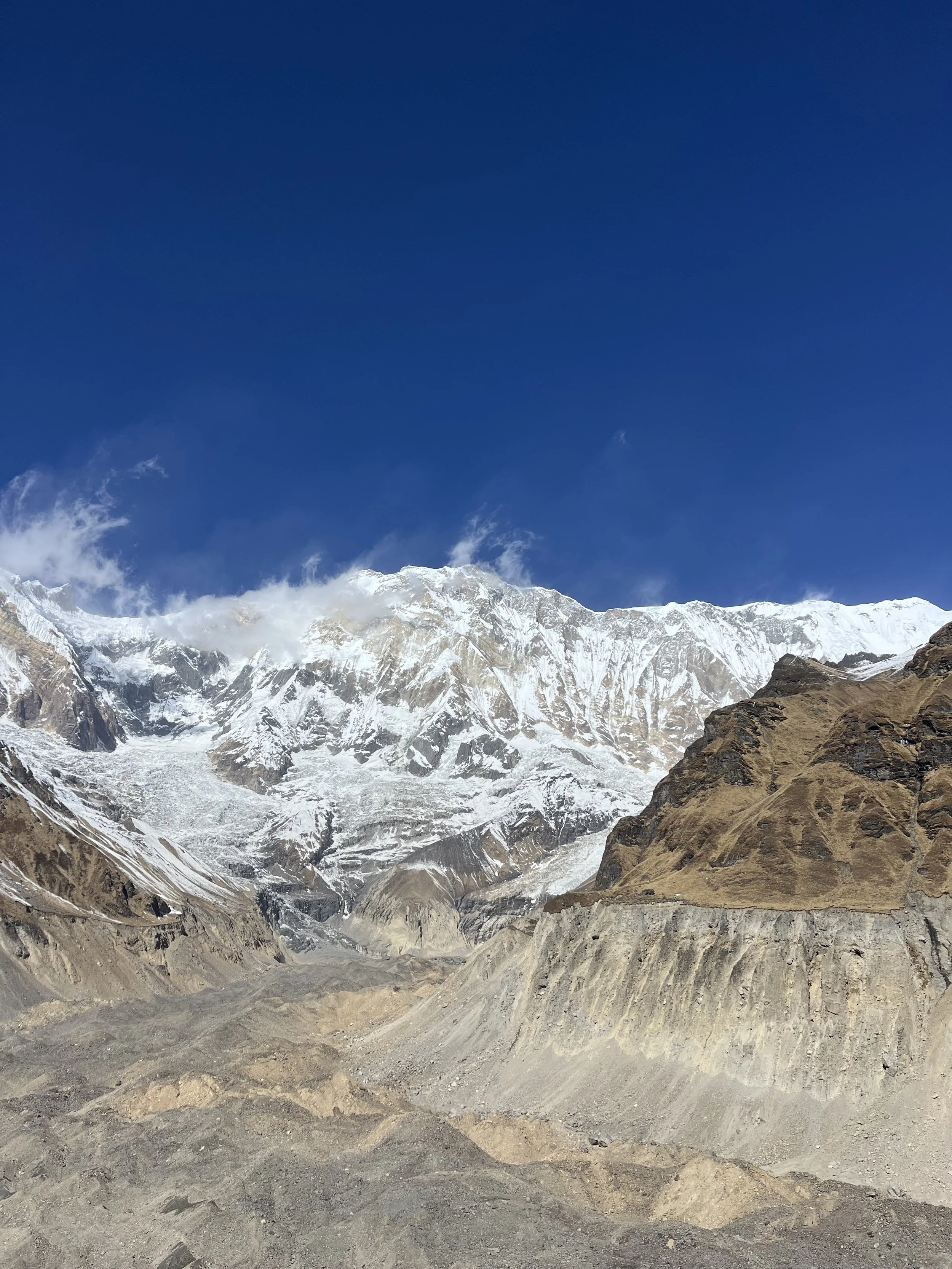
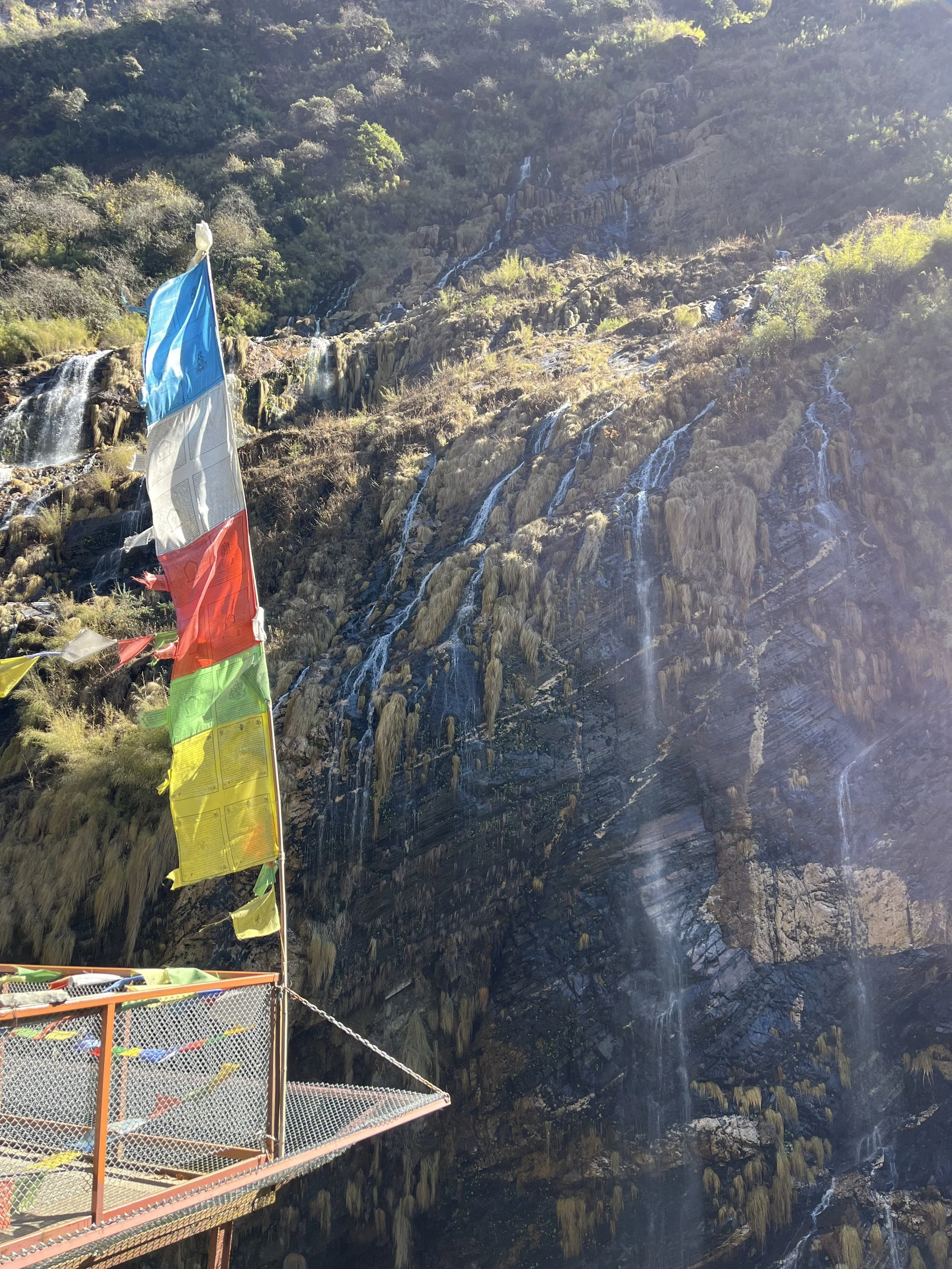
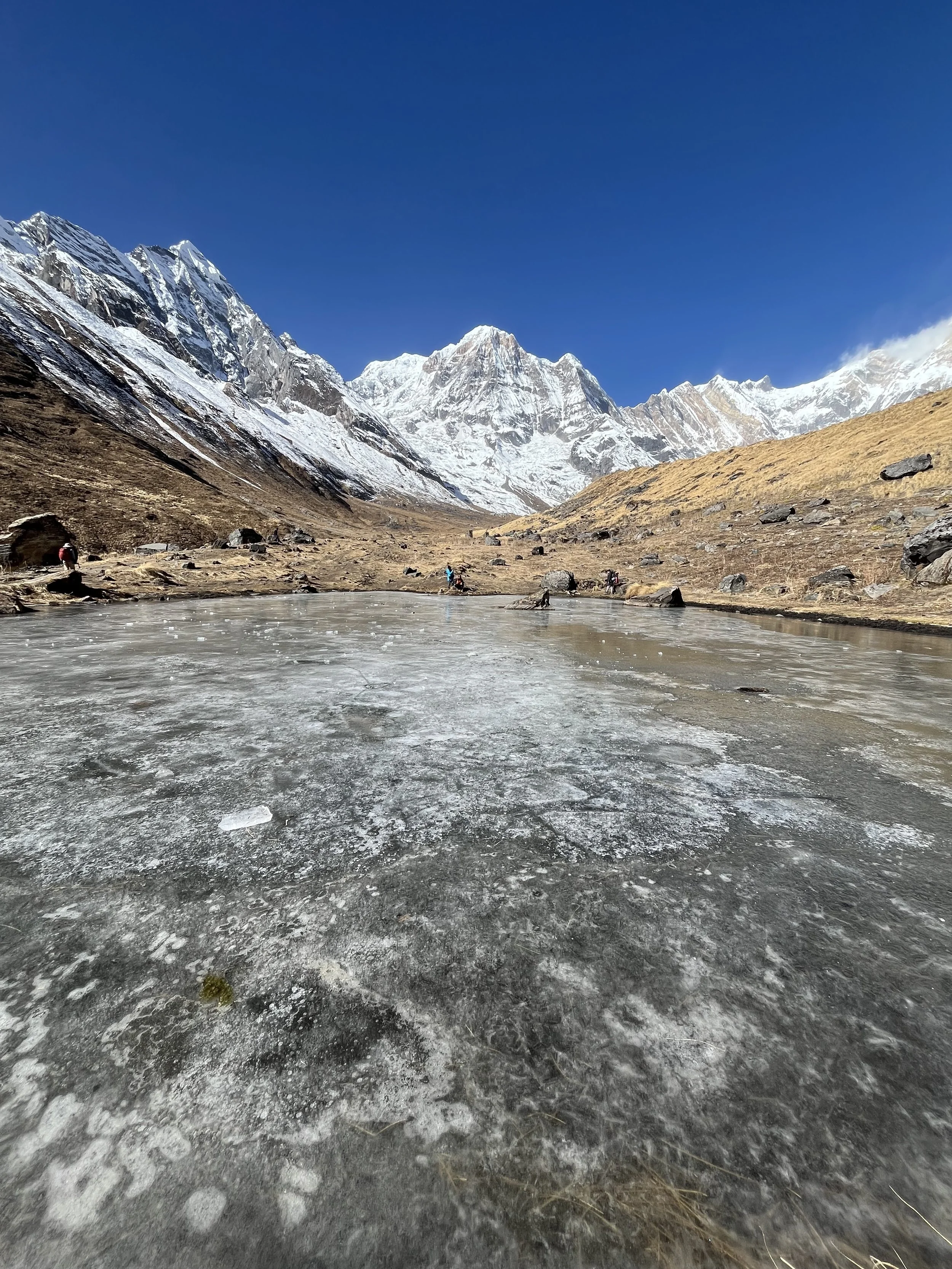
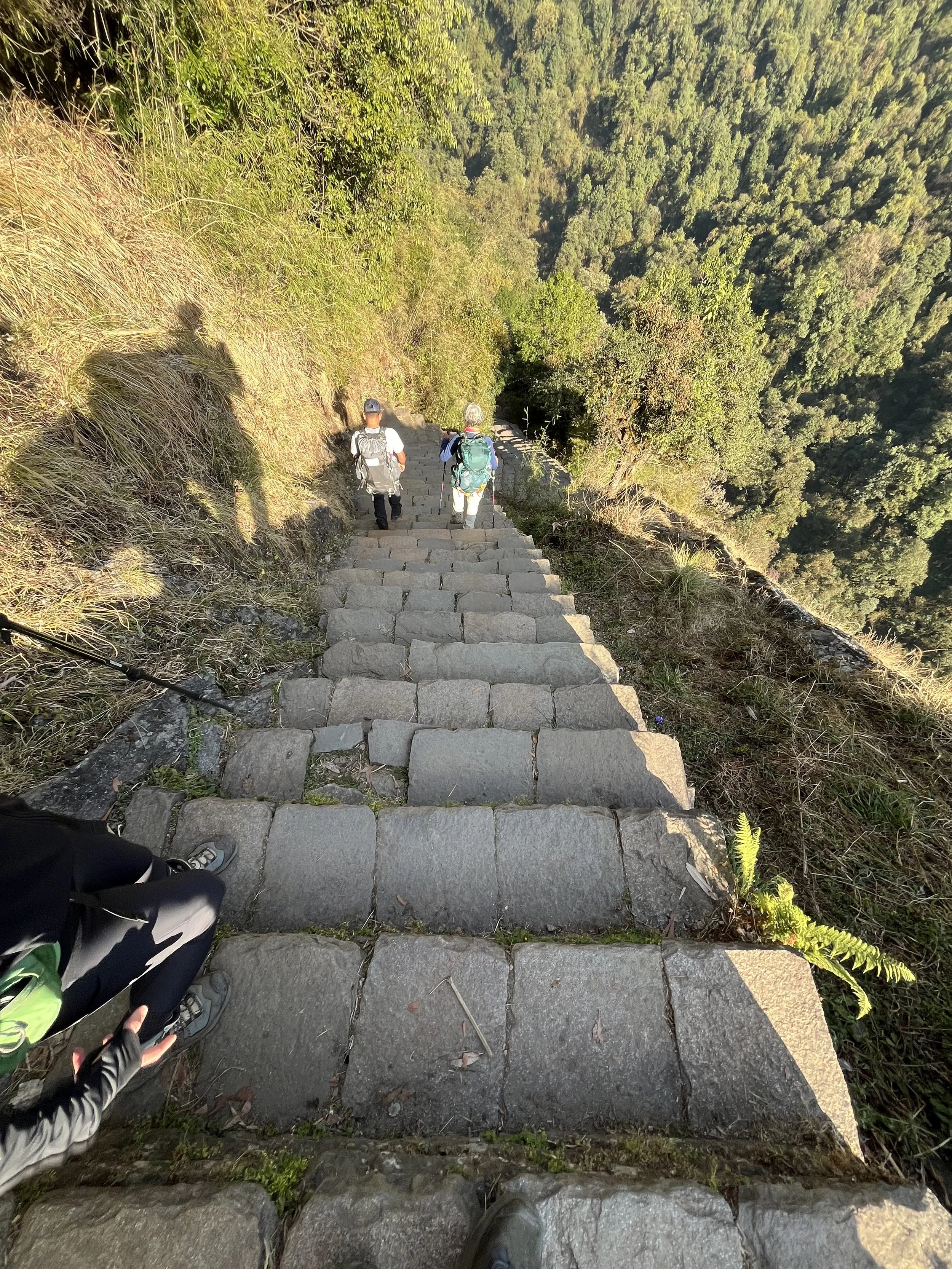
We spent seven days hiking the route. The route is STEEP, but not technical. Tea houses with beds are scattered along the way, as is fresh tasty food (don’t sleep on the Nepalese pizza!) You start in a lower elevation forest complete with the must visit Jhinu Danda hot spring in Ghandruk right at the beginning of the trek. From here you ascend to more jungle like conditions, and trek your way up through a canyon to high elevation mountain ranges where the Himalayan mountains are literally smacking you in your face from all angles.
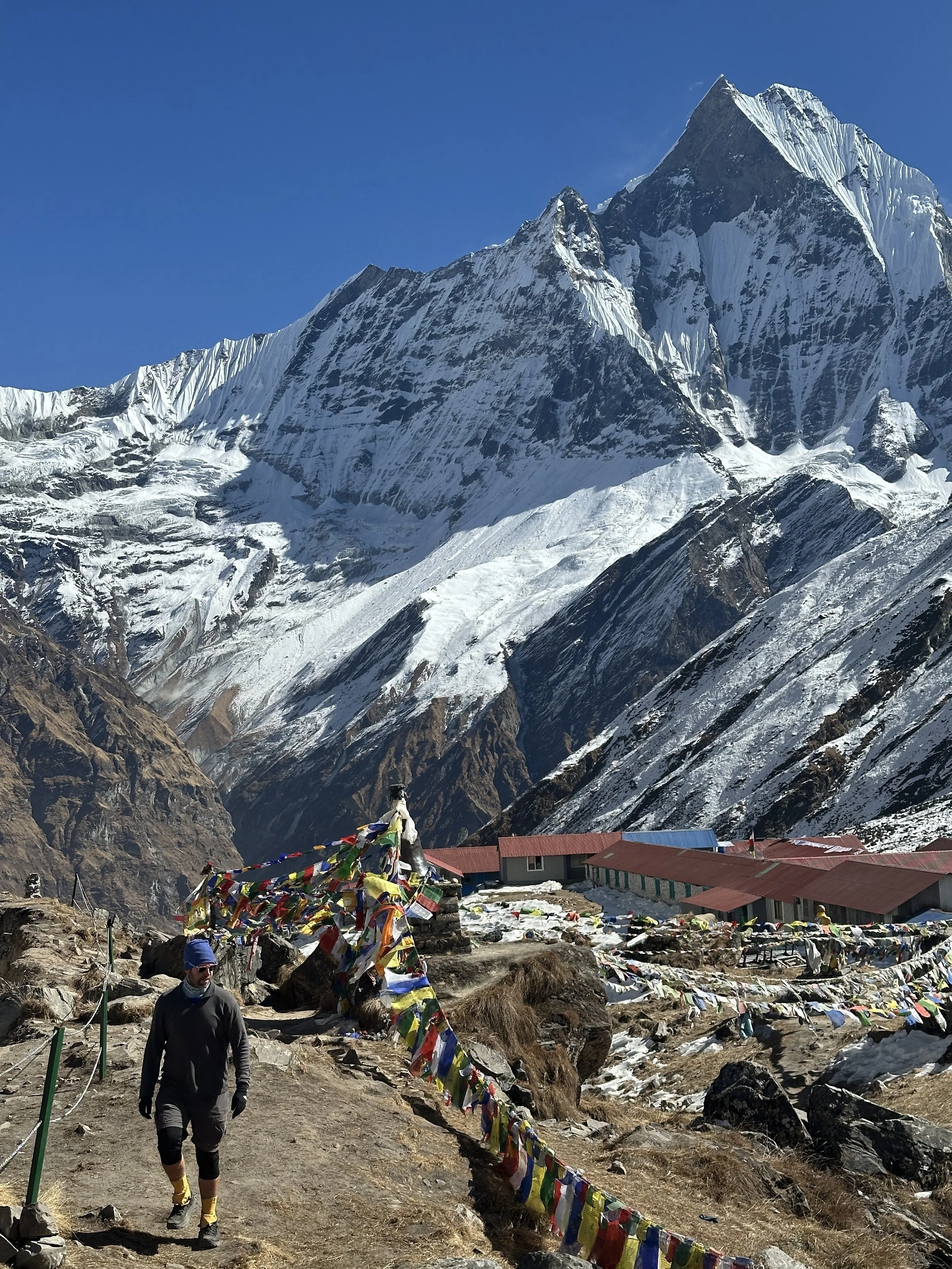
Fishtail Mountain, known locally as Machhapuchhre, is a sacred, iconic Himalayan peak in Nepal's Annapurna range, famous for its unique double-summit shape resembling a fish's tail. Standing at 6,993 meters (22,943 ft), it's a spiritually significant mountain, considered the home of the god Shiva, and remains officially unclimbed, preserving its mystical beauty for trekkers on routes like Annapurna Base Camp.
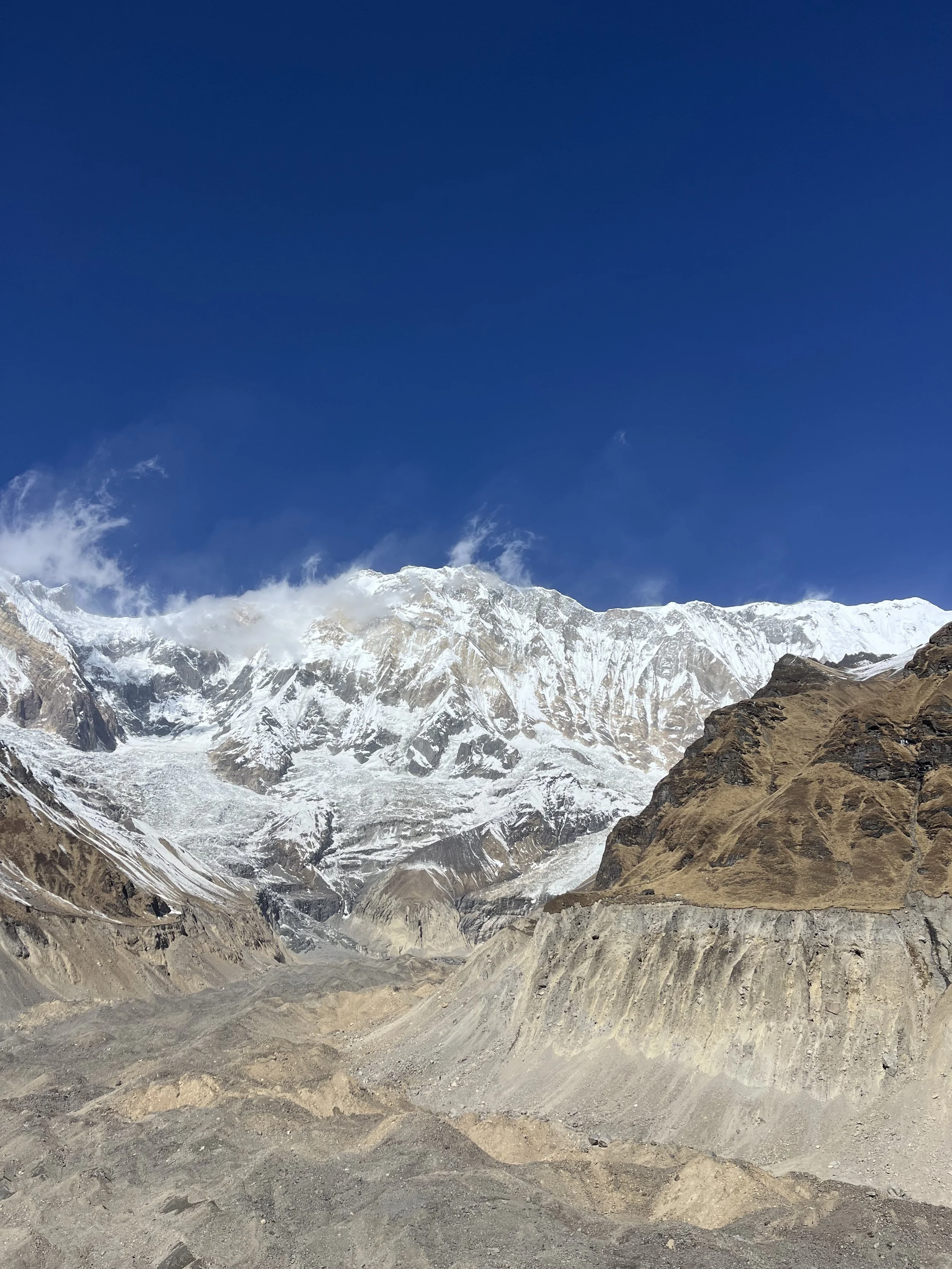
Then there are the Annapurna’s. I say that with an S because the Annapurna range includes six more mountains beyond Machapuchhre. Annapurna I, II, III, and IV amongst them. While Annapurna is the 10th highest mountain in the world and it’s base camp is relatively safe to reach the summit is NOT! The base camp is filled with memorials of people who lost their lives attempting to summit. It’s the most deadly 8,000 meter peak mountain in the world with a fatality rate of now just under 30%! Close to 400 people have reached the summit with estimates around 75 deaths. Base camp is where the journey ends for most, but for a few it’s only the beginning.
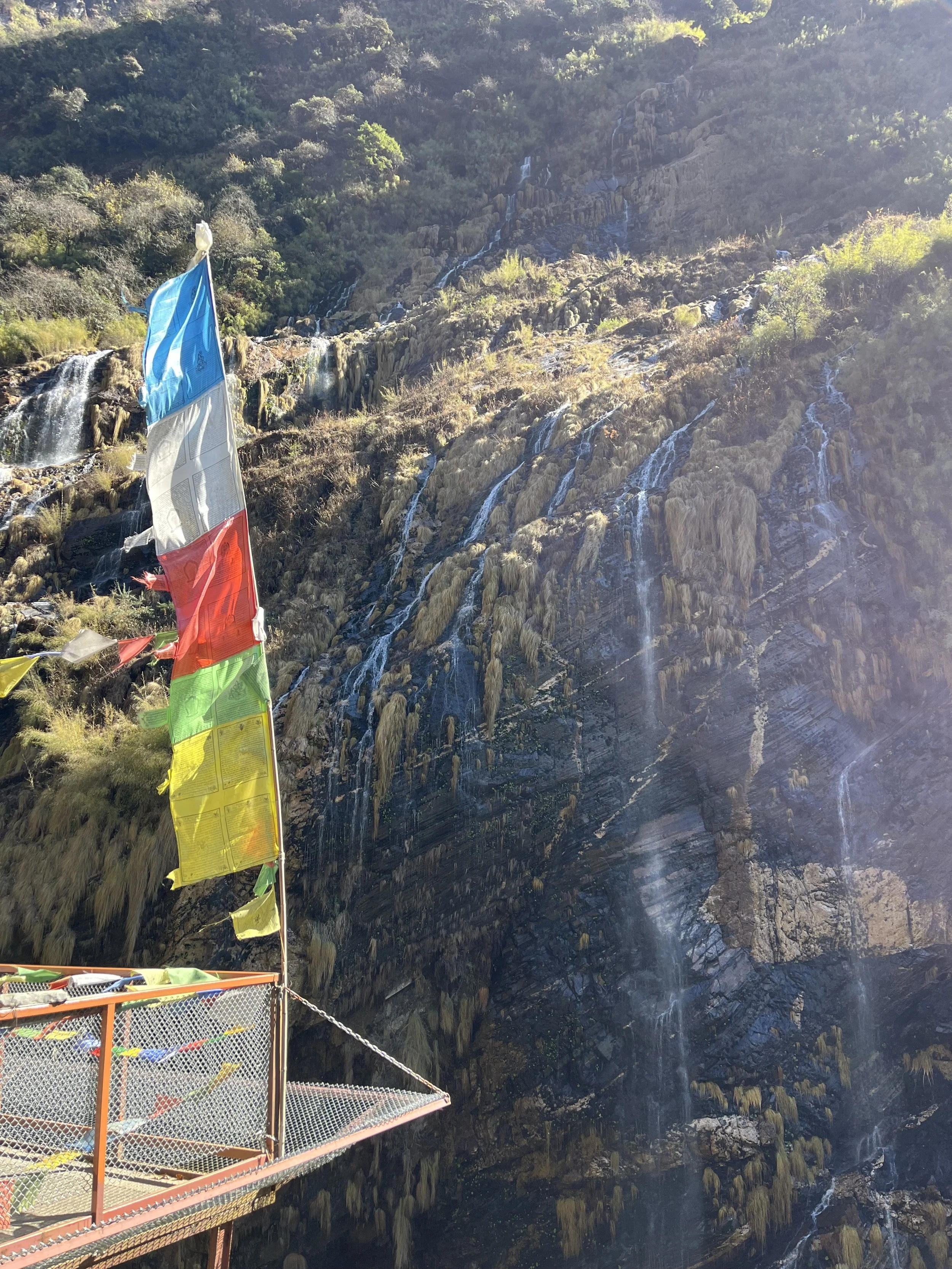
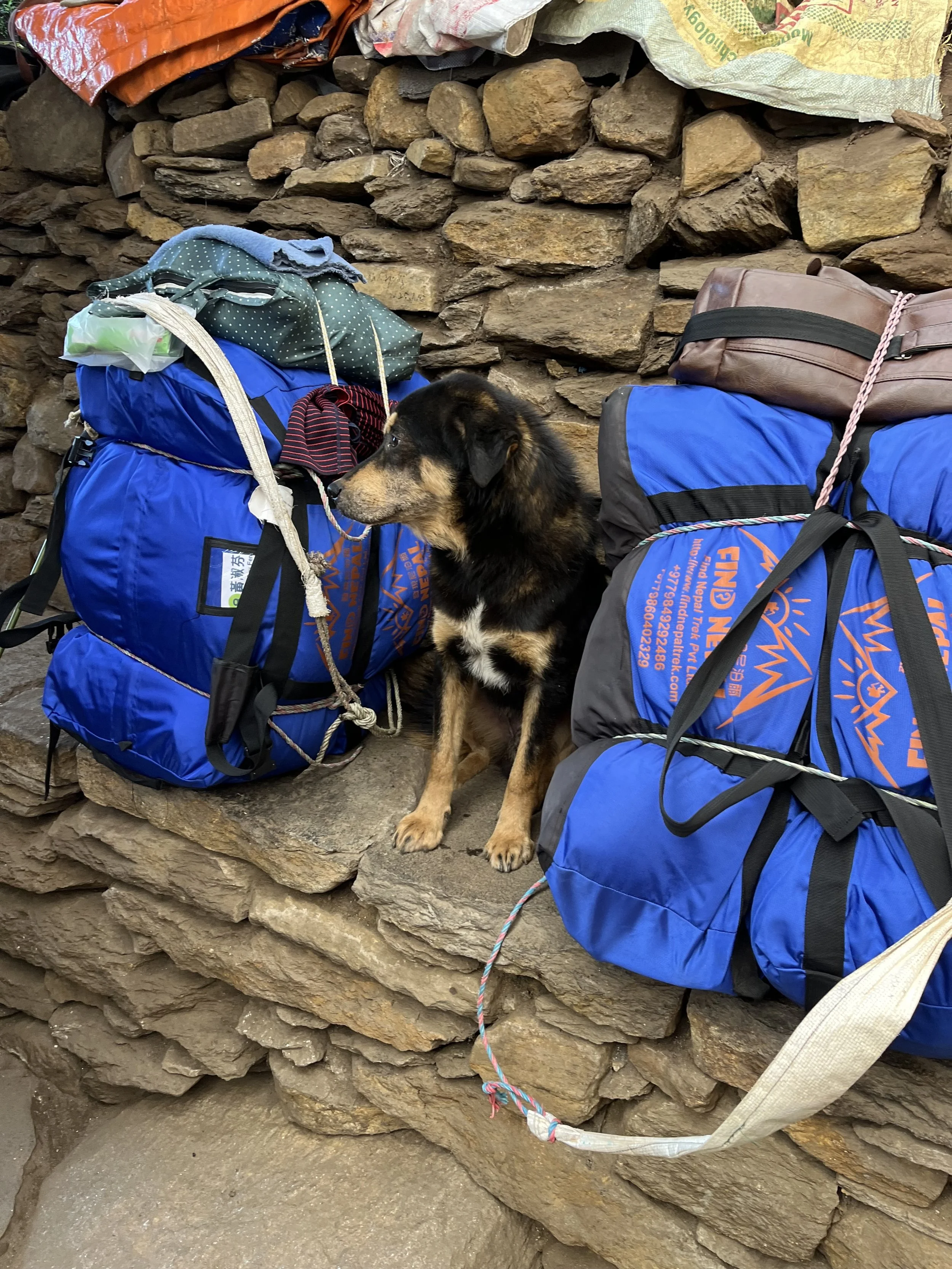
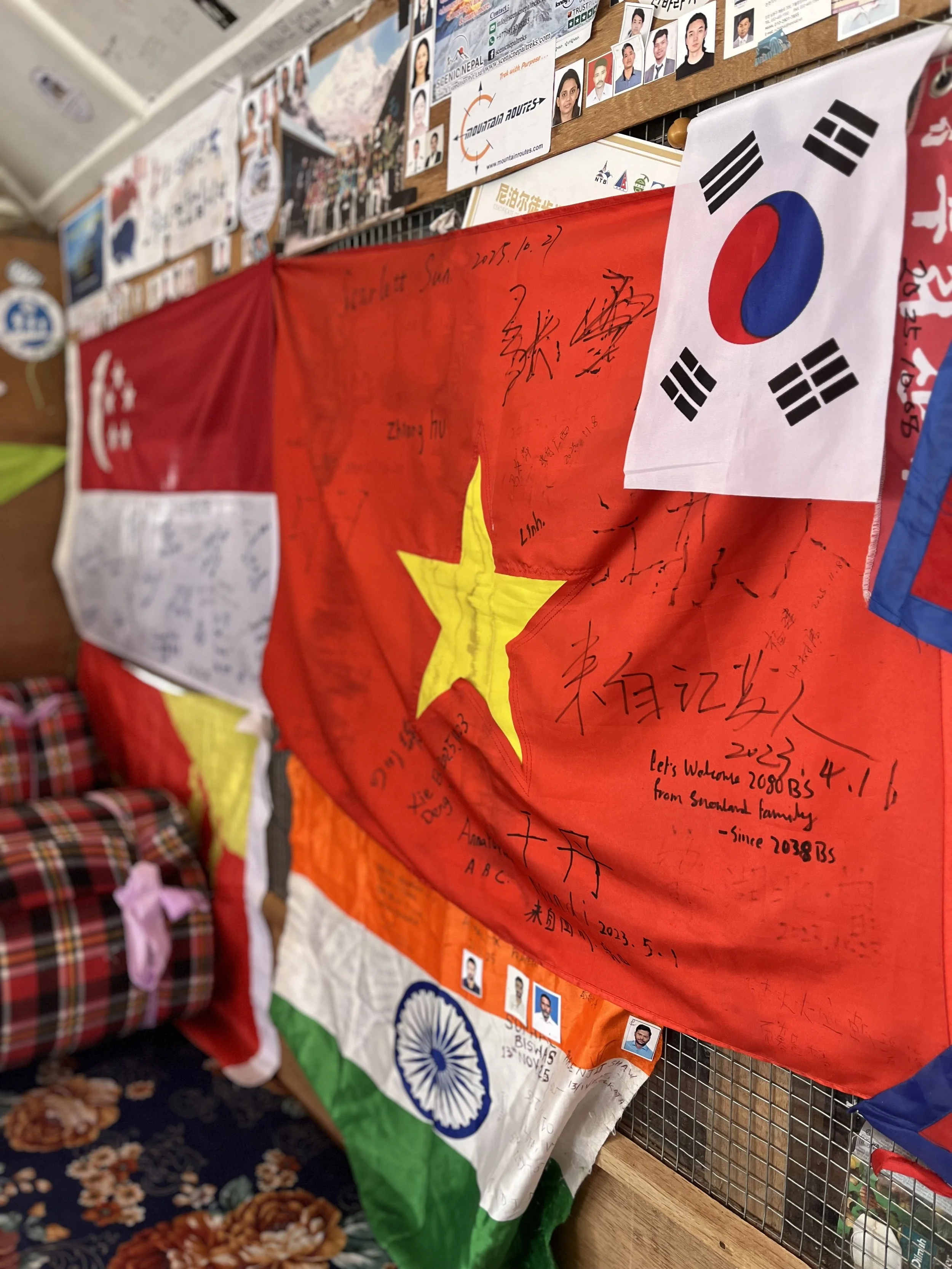
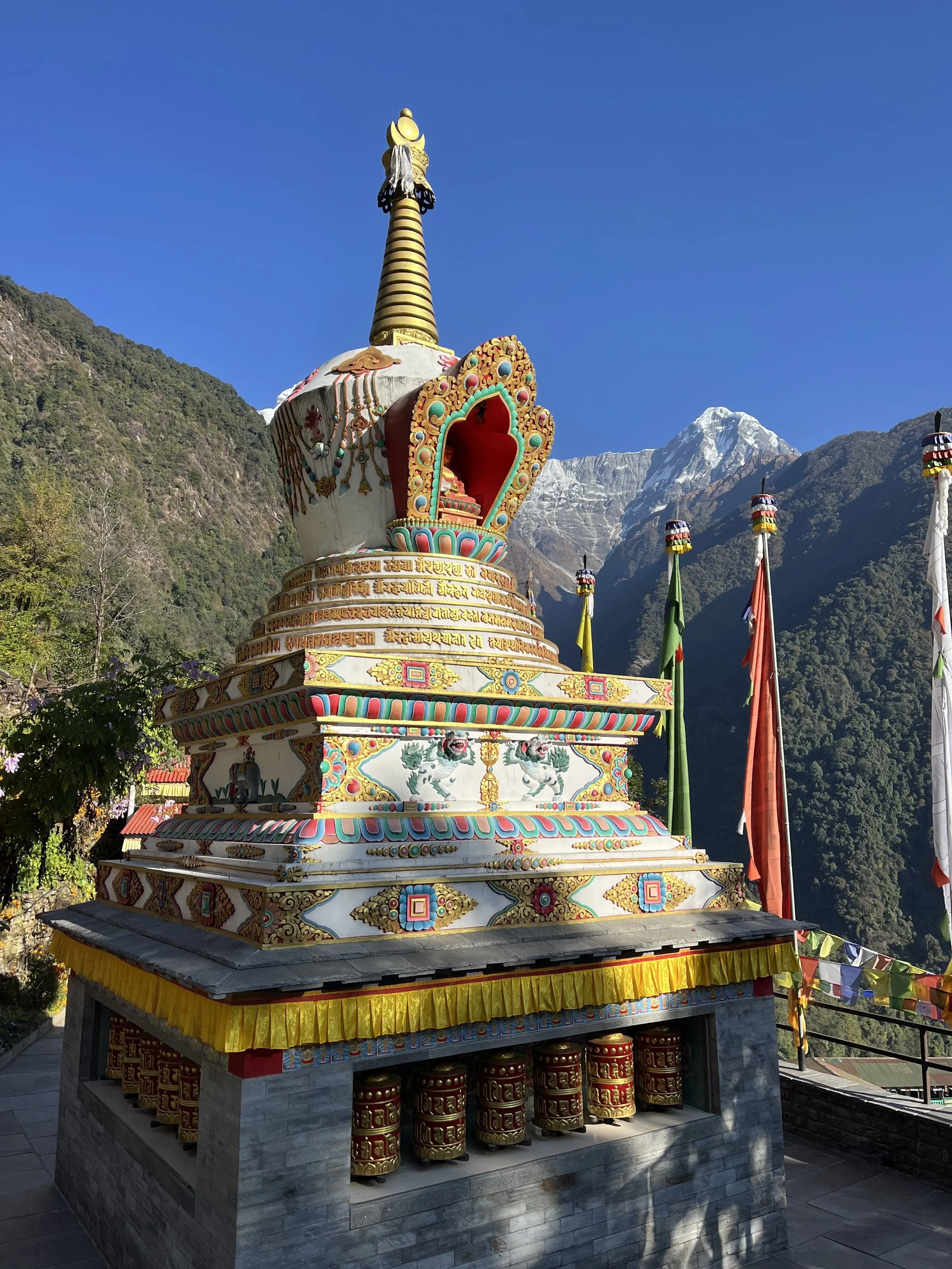
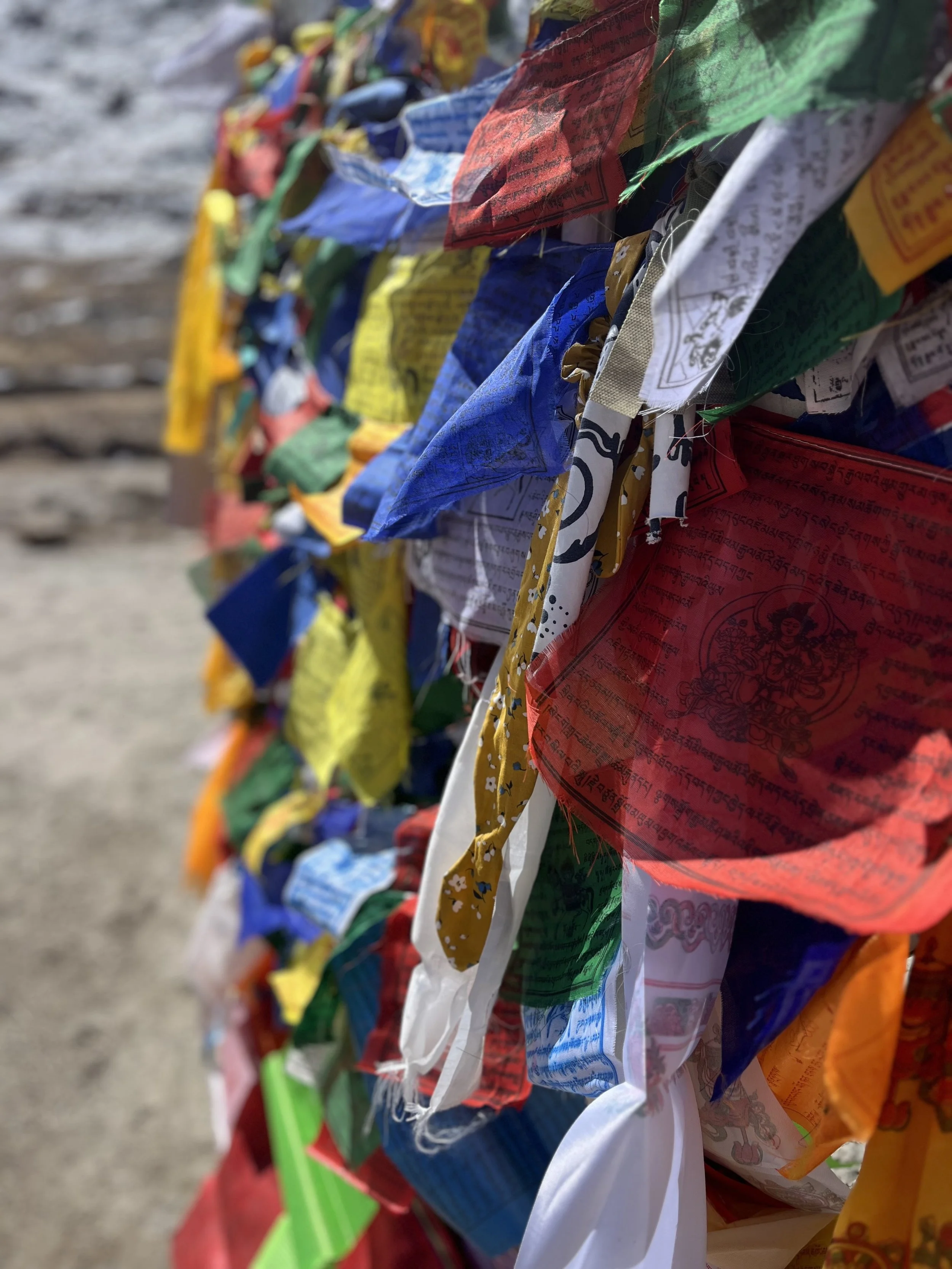
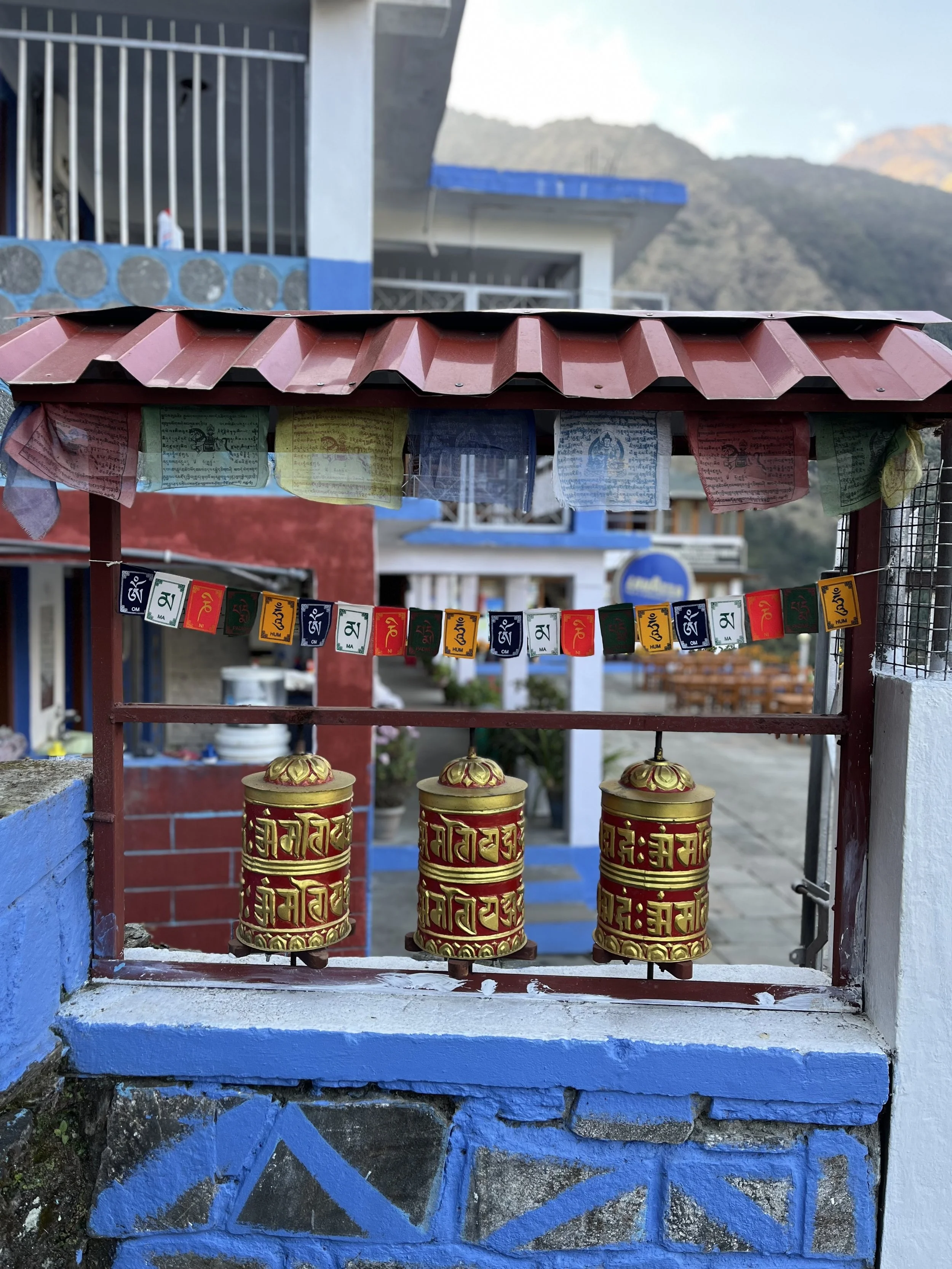
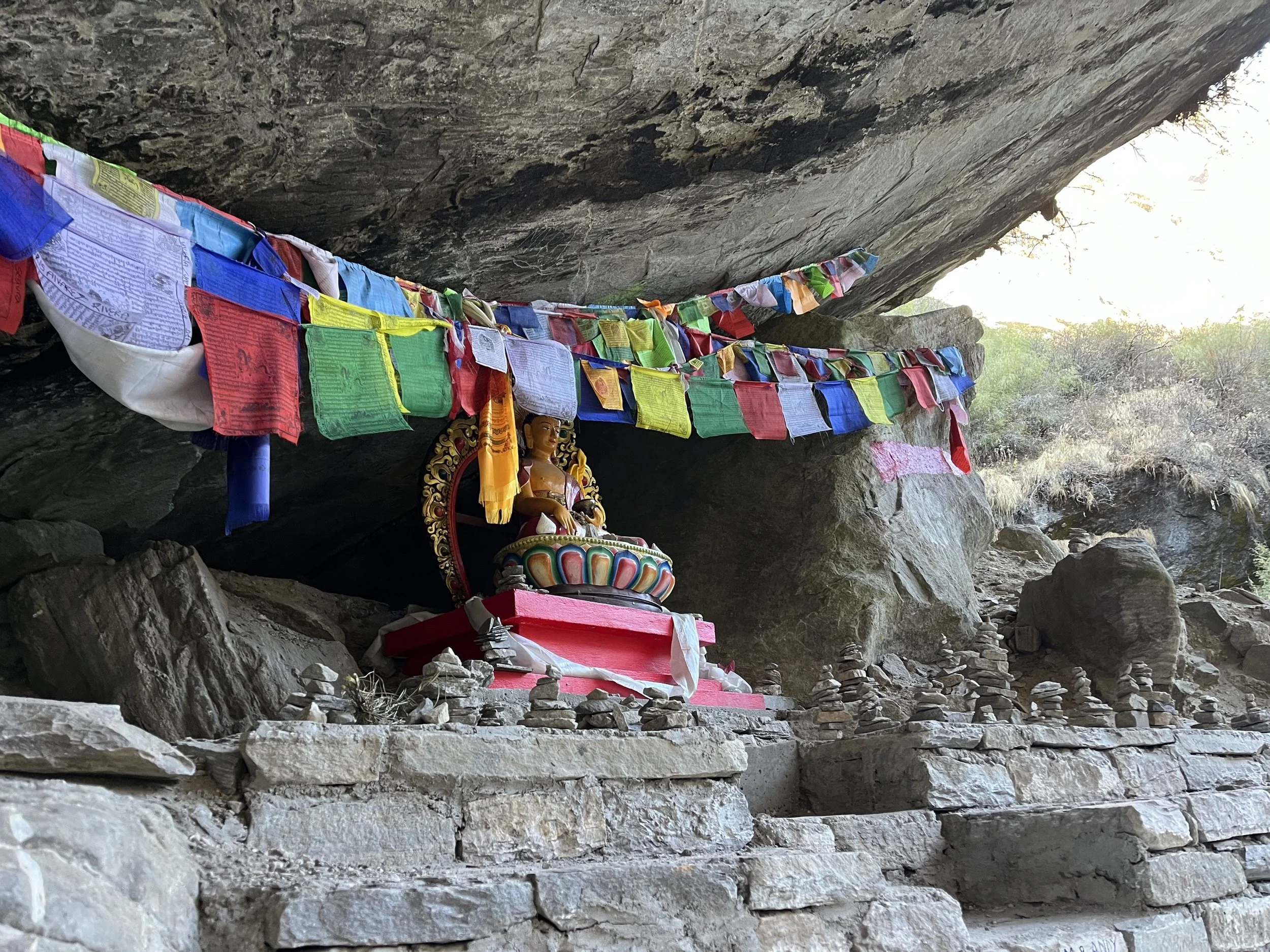
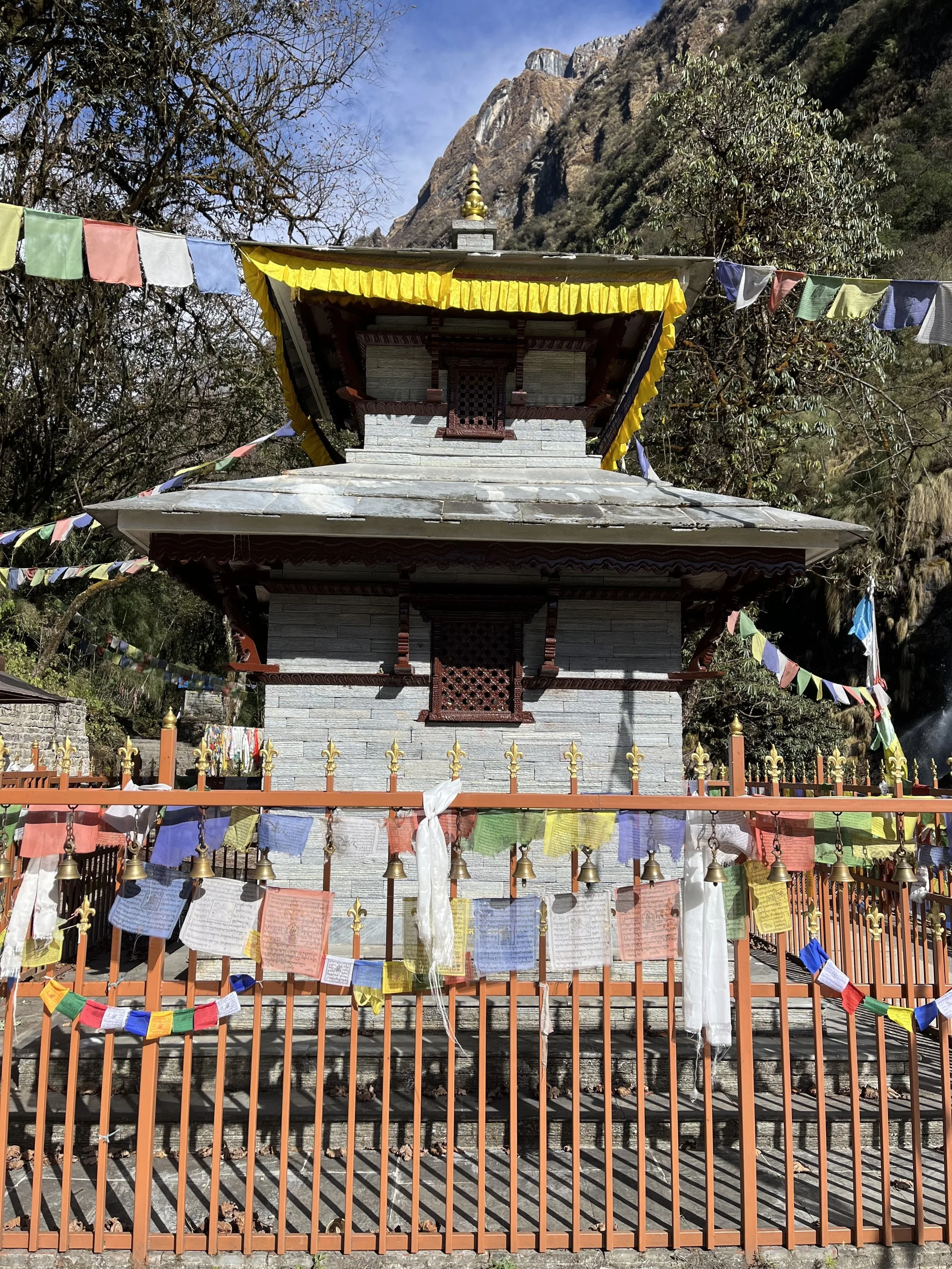
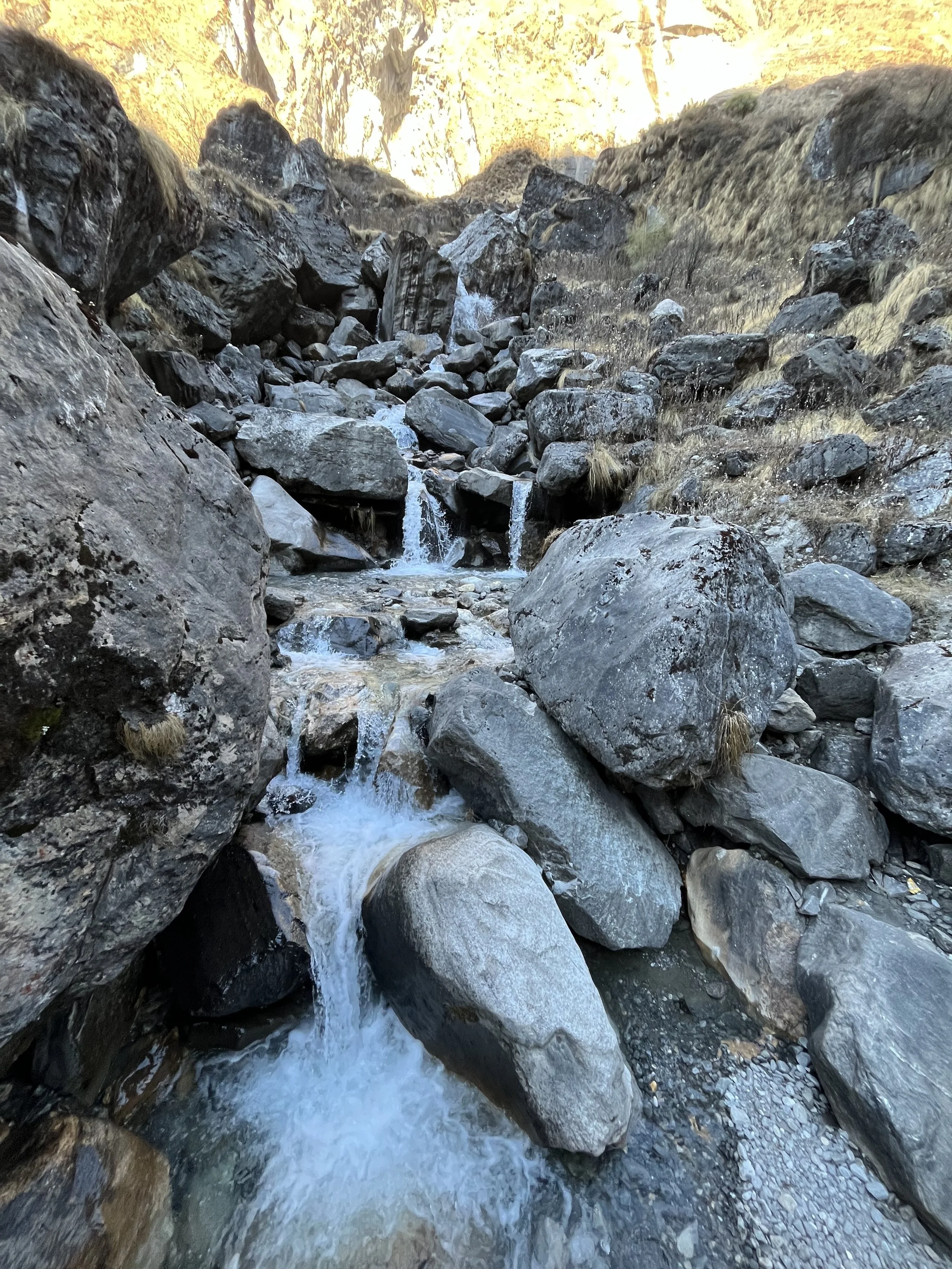
Overall the ABC trek is EASY to follow, moderate to hard to hike, but very doable if preparation and training have been done properly. You’ll get to encounter trekkers from all over the world, the sweetest dogs and cats, stupa’s galore, prayer flags and wheels guiding you safely as you navigate, waterfalls cascading like the TLC slong, more dhal bhat and curry than one could ever imagine eating, and a chance to have, at least for me, one of the most heartwarming adventures on my life!
What else should you know about trekking to Annapurna Base Camp in Nepal?
After doing this trek I have a few, hopefully helpful thoughts for you below :)!
If you’re tight on time and comfortable in elevation between 3,000 and 4,000 meters you could do the trek in five or six days instead.
Eat the cooked and hot Nepalese food. I still had immodium handy but even if the meals feel on repeat it’s the most nourishing and nutritious food to eat.
I don’t think everyone needs a guide, but a porter should be required and a healthier than average tip should be included to compensate them. They are the true mountaineers of this country and range, with all due respect to the westerners we know about from the books and headlines. Take care of them and also lighten your load, it’s an honorable job for these people.
If you’re coming in high season make reservations at the tea houses!
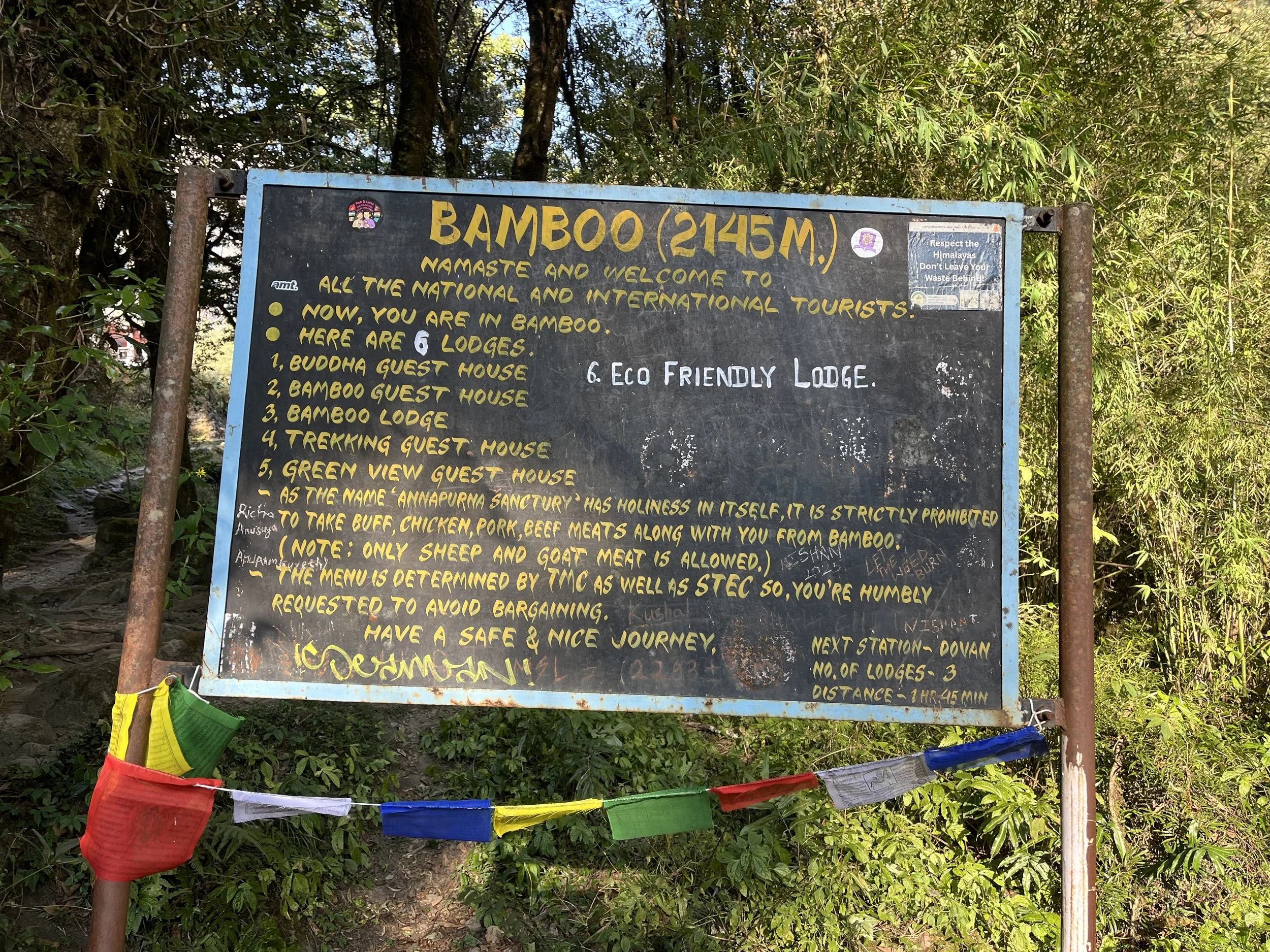
The whole region is under protection via the Annapurna Conservation Area Project. You can learn more about the important work being done here. The teahouse menus are set from here, as is trail maintenance, and protection of the ecosystems, plants, and wildlife.
It’s a long way for many. There are ample opportunities for other treks, time in Pokhara and Kathmandu (I did yoga, a cooking class at a Tibetan refugee camp, ate splendid meals, toured UNESCO world heritage sites, and even did the Kathmandu Secret Food Tour!) Take a little longer time to do more than click a few photos at the end of the ABC trek is all I am suggesting!
Give back if you can. I make a donation equivalent to at least half the cost of any trip I do (all places you visit have someone or something living on the fringes.) I chose Karma Flights for my time in Nepal.
What do I want to remember about my Annapurna Base Camp Trek in Nepal?
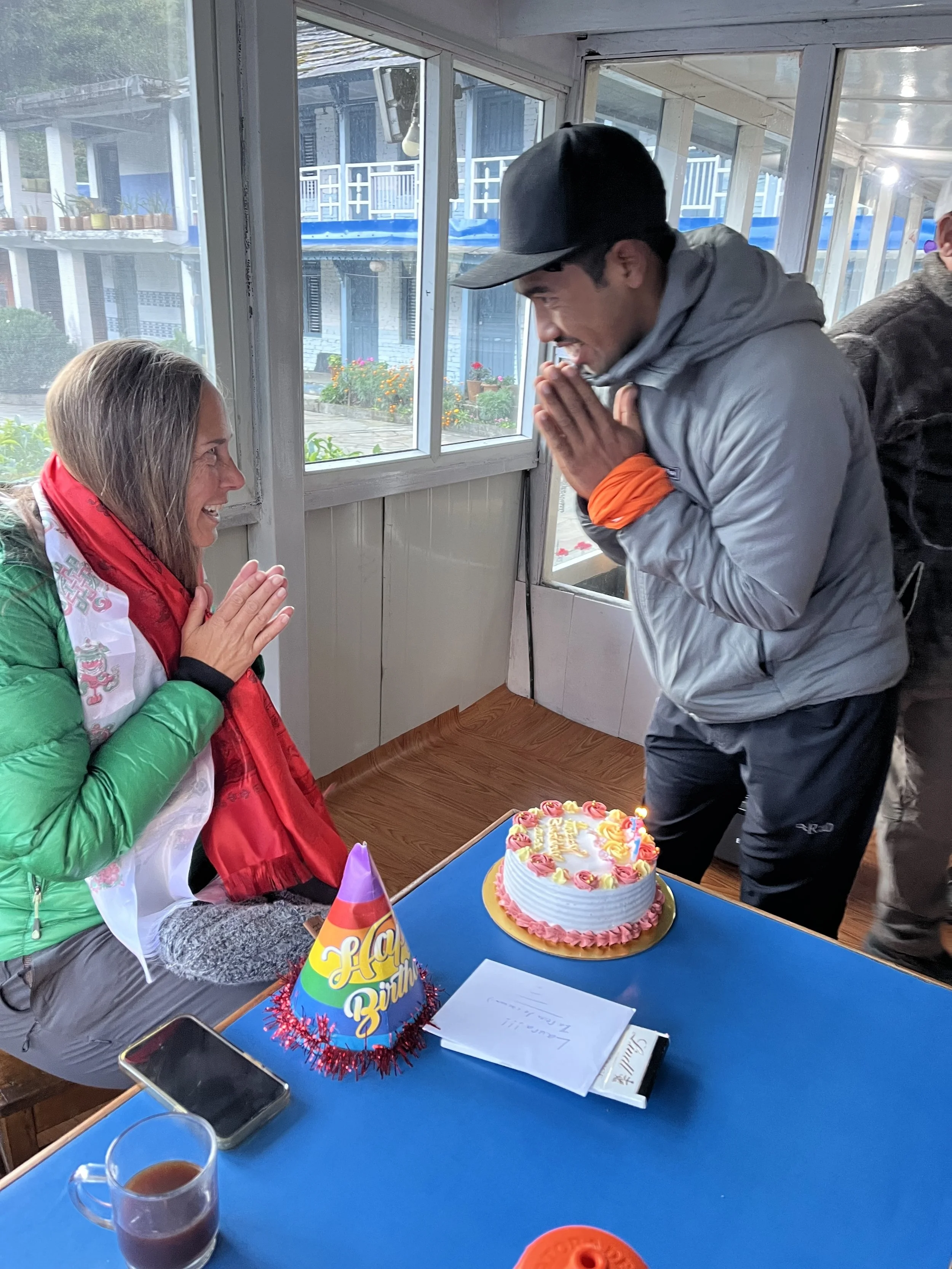
This is sacred land and it was a sacred trip. We celebrated a milestone birthday for a dear friend, everyone made it to base camp, and we had no significant injuries. I moved slowly (even when I could breathe) and had quiet solitude in the most beautiful mountains I have ever laid my eyes on.
The people (and the dogs/cats) were so welcoming and sweet in Nepal I will be returning as soon as I can. Probably not on my next overseas trip but soon after that. I’ve never felt a hold on a place for me as I did with Nepal.
Nothing is promised and nothing lasts forever, but I hope I carry how I felt and what I experienced with me in Nepal out to the rest of the world as I interact and continue to walk this Earth. Coming here was a long time coming and it was worth the wait.
Thanks for reading, comment with any questions I can support with in answering if you want to trek to Annapurna Base Camp!
Because Adventure Feeds the Soul,
Mike